
 App
Wed, 18 Nov
Protecting Your Roster: A Practical Guide to Club Contracts and Player Records in South Africa
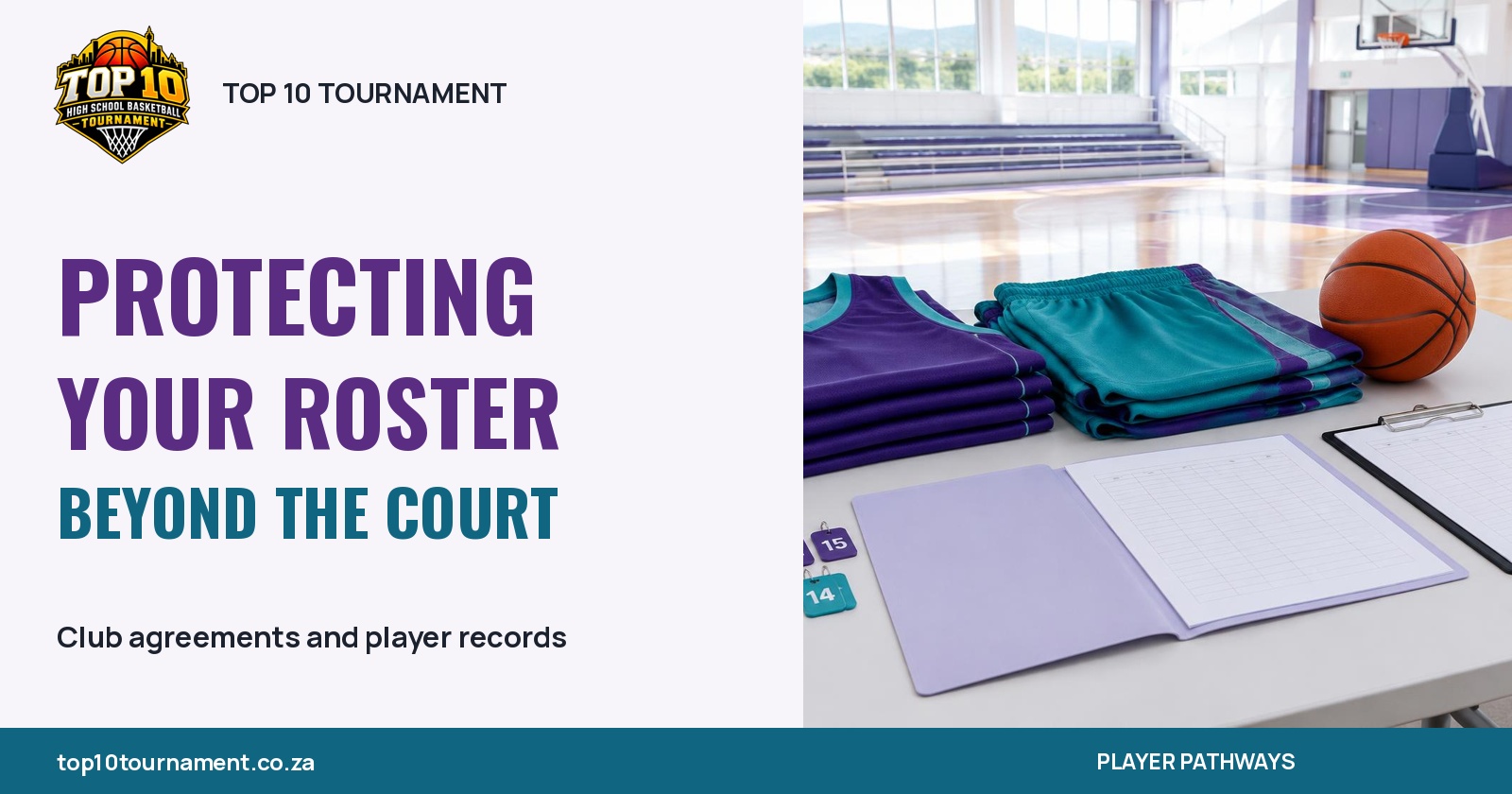
Last week, we explored Transfers, Clearances and Chaos: why eligibility checks matter before a player changes jerseys. This week, we turn that discussion into practical paperwork that protects both the club and the player.
South African basketball operates across different leagues, provincial structures, school competitions and university programmes. Clubs should not assume that one registration system provides a complete record of a player’s commitments elsewhere. Where administration is fragmented or records are difficult to obtain, clear agreements and consistent internal record-keeping become particularly valuable.
Mid-season departures, unreturned kit and eligibility disputes can undermine a club’s season. Players also need clear dates and a fair process for moving on. A well-kept file helps both sides establish what was agreed, what was registered and what still needs resolving.
Important: this is general guidance and a starting-point template, not legal advice or an official Basketball South Africa or FIBA form. Have your agreement reviewed for your competition and circumstances. Competition regulations and applicable law take priority; an internal club agreement does not itself register a player or guarantee eligibility.
1. Why a one-page seasonal agreement matters
Grassroots and amateur clubs sometimes avoid agreements because they associate contracts with professional salaries. Yet even an unpaid club invests in court time, league entry fees, coaching and playing kit.
- For clubs: written terms establish the season’s dates, responsibilities, kit ownership and a documented release process.
- For players: the same document explains when their commitment ends, what fees were agreed and how to request a release without unreasonable delay.
Keep legitimate kit or payment disputes separate from eligibility decisions. A club should not assume that a disputed debt automatically gives it the right to block registration. Ask the relevant registrar for the current rules and use the proper dispute process.
2. Template: seasonal club–player agreement
Copy and adapt the following starting point before the season begins. Add your league’s actual requirements rather than treating the example deadlines as nationwide rules.
Seasonal Player Registration and Commitment Agreement
1. Parties
This agreement is between [Basketball Club Name] (the Club) and [Player Full Name] (the Player). Record any identity reference needed for registration securely in the private player file rather than on copies circulated widely. For a player under 18, obtain a parent or legal guardian’s involvement and signature and check applicable safeguarding requirements.
2. Term
The agreement covers the [Year] season, from [Start Date] to [End Date], and expires on that date unless both parties agree a lawful written extension. State the competition and any separate registration deadlines: [League/Competition and deadlines].
3. Club commitments
The Club will submit the Player’s registration to [League/Competition], provide scheduled coaching and training, issue the agreed playing kit and keep the Player informed of registration decisions. The Player may compete only once the responsible organiser or registrar confirms eligibility.
4. Player commitments
The Player will follow the Club’s code of conduct and the competition’s rules, attend the agreed activities, and pay any agreed subscription of R[Amount] by [Due Date], if applicable. Before playing for another team, the Player will disclose existing registrations and obtain any release, permit or approval required by the relevant competition. School, university and club dual participation must be checked separately.
5. Kit and club property
List the items issued, their condition and which items remain Club property. As an agreed club target, Club-owned kit should be returned in reasonable condition, allowing for fair wear and tear, within seven calendar days of the agreement ending or early release, unless another date is recorded in writing. Record any genuine loss or damage and use a fair, documented resolution process.
6. Early release and end-of-season clearance
The Player may request an early release in writing. The Club will respond promptly, explain any unresolved matter and follow the competition’s release and dispute procedures. When the agreement ends, the Club will aim to supply any required release or clearance documentation within seven business days, subject to the responsible registrar’s procedures. Record returned kit and any agreed outstanding fees separately; do not assume those matters justify withholding eligibility paperwork. Do not invent an automatic transfer fee when an agreement expires: any proposed charge must have a lawful basis and comply with the competition’s rules.
7. Disputes and copies
Unresolved issues will first be discussed in writing, then referred through [Competition/Association dispute process] or an appropriate independent legal process. Each party receives a signed copy. This agreement cannot override statutory rights or the governing competition’s regulations.
Signatures
Player: ____________________ Date: __________
Club official and title: ____________________ Date: __________
Parent/legal guardian, where applicable: ____________________ Date: __________
3. Build a secure player compliance file
A controlled spreadsheet can track registration progress; a restricted-access folder can hold supporting documents. Neither replaces an official registration system. Give access only to authorised people who need it, use strong account security and avoid public links or documents shared across large WhatsApp groups.
- Identity and eligibility evidence: collect only what the organiser requires to verify identity, age and relevant eligibility categories. Do not collect full identity documents merely because they might be useful later.
- Signed seasonal agreement: retain the current agreement and any written amendments or guardian authorisation.
- Previous clearance or participation permit: keep the documents actually required by the receiving competition. Confirm school/university dual participation where relevant. For international movement, check the FIBA Letter of Clearance process through the national federation.
- Registration confirmation: retain the submission date, proof of any required fee and the registrar’s written eligibility confirmation. There is no universal 72-hour rule: obtain the actual deadline for your competition.
- Kit and fee sign-off: record jersey numbers, items issued and returned, agreed charges and any unresolved dispute. Keep financial and identity records private.
Set a documented retention period and dispose of records securely when they are no longer required, subject to legal and competition obligations. Explain to players why their information is collected, how it is used and who may receive it. For children’s information, check the applicable POPIA consent and safeguarding requirements rather than assuming a general club signature covers every use. Participation paperwork is not a substitute for separate media consent.
4. What players should do before signing
- Keep your own copy. Check the start date, end date, fees, release process and kit-return arrangements before signing.
- Request clearance in writing. Email or WhatsApp can provide a dated record. Ask who is responsible for the next step and follow up with the registrar if necessary.
- Disclose other commitments. Do not assume that playing for a school, university or another club is permitted in the new competition. Obtain the required written approvals.
- Wait for confirmed eligibility. A coach’s assurance or a submitted form is not necessarily approval. Ask for the responsible organiser’s confirmation before competing.
Clear records, fair treatment, fewer disputes
Good administration should protect a club’s investment without trapping a player’s next opportunity. Clear seasonal agreements, secure records and timely communication give everyone a more reliable foundation—whatever the wider governance challenges.
Before your next registration: agree the terms, check the current competition rules, record the kit, secure the documents and confirm eligibility before tip-off.
For international transfer requirements, consult the current FIBA Internal Regulations, Book 3: Players and Officials. Domestic requirements must be confirmed with your own league, association or organiser.
William Price
Director
Top 10 Tournament (Pty) Limited